How to Run a 15-Person Company With a Team of 5 (Using AI Employees)
You run a 15-person company with five people by handing the repeatable knowledge work (sales follow-ups, support, research, reporting, operations) to AI employees, and keeping your humans on judgment, relationships, and strategy. The leverage isn't working harder. It's giving each person a few tireless AI coworkers.
Key takeaway: Most of what a growing company "needs more headcount" for is repeatable knowledge work, not irreplaceable human judgment. AI employees absorb the repeatable layer, so a small team covers the surface area of a much larger one.
The leverage math
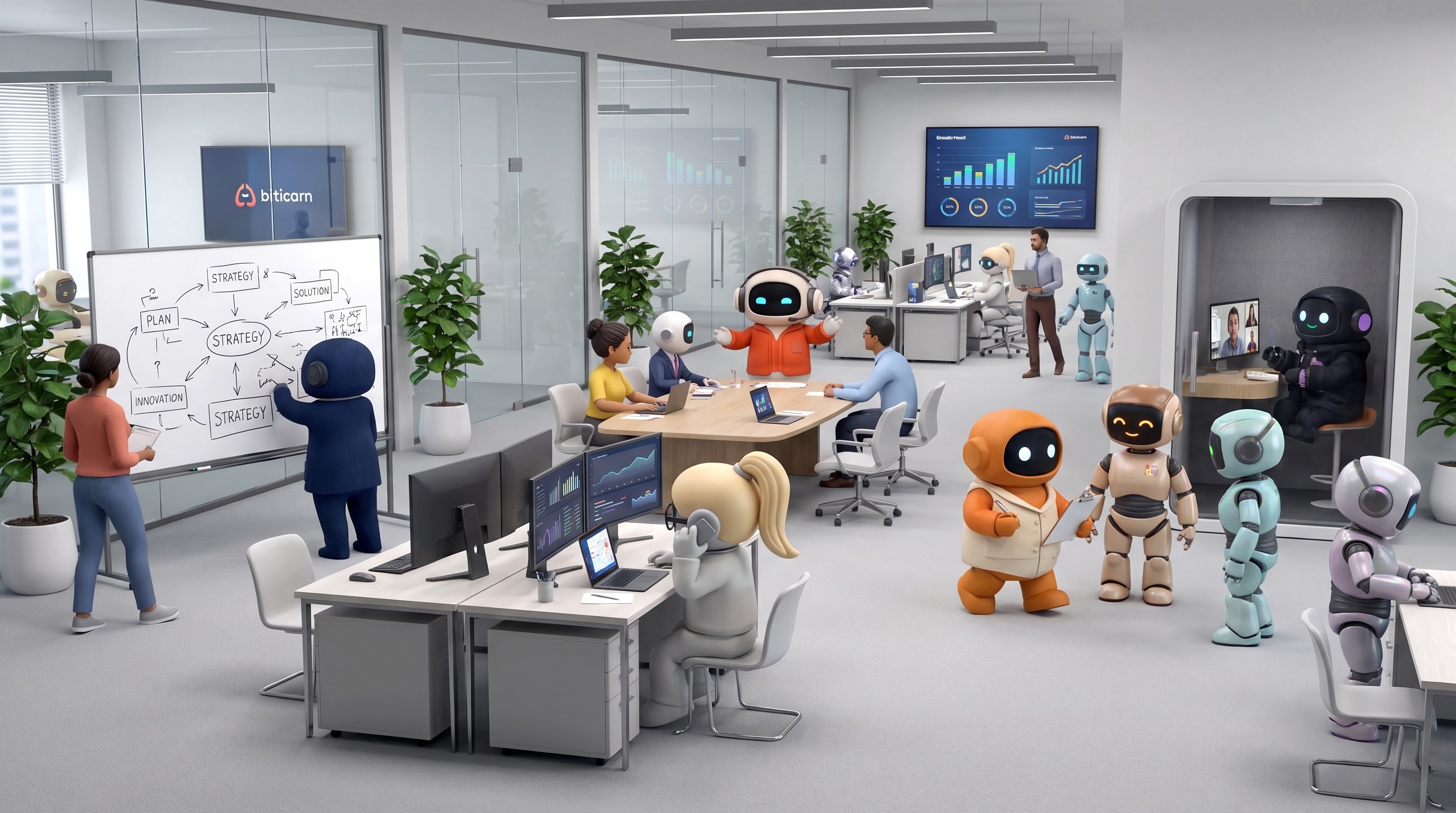
A traditional 15-person company isn't 15 people doing strategic work. It's a handful of decision-makers plus a larger layer of people executing repeatable tasks: chasing leads, triaging tickets, compiling reports, doing first-pass research, keeping data updated.
That execution layer is exactly what AI employees are good at. Give your five humans a set of AI coworkers and you cover the same functions without the same headcount. Each person stops being a one-person bottleneck and becomes a manager of output. (The trade-off versus hiring is broken down in AI employees vs. hiring.)
What the humans keep
This only works if you draw the line in the right place. Humans hold:
Judgment and taste. What to build, who to hire, when to say no.
Relationships. The high-stakes sales conversation, the unhappy customer, the partnership.
Direction. Strategy, priorities, and the standards everything else is measured against.
AI employees hold the repeatable execution underneath those. You're not replacing your team. You're removing the work that was keeping them from the work only they can do.
How the work splits
Function | Human (5 people) | AI employees |
|---|---|---|
Sales | Close calls, key relationships | Research prospects, draft follow-ups, update CRM |
Support | Hard escalations, angry customers | Triage, draft replies, resolve repeat questions |
Marketing | Strategy, brand calls | Draft content, repurpose, schedule |
Operations | Decisions, exceptions | SOPs, data entry, status compilation |
Research | Interpret, decide | Gather, summarize, compare |
Five people sitting on top of those columns cover what used to take fifteen.
The thing that makes it work: shared context
Plenty of teams "add AI" and feel busier, not bigger. The reason is almost always missing context. An AI employee with no memory of your business needs constant re-briefing, which just moves the work around.
The unlock is a company brain: one shared source of truth every agent reads from, so they act with your facts, voice, and history without being re-briefed. With shared context, agents behave like coworkers who already know the business, not interns you onboard every morning. That's the difference between AI that adds overhead and AI that adds capacity.
A realistic week
Sales: Your AI sales employee researches inbound leads overnight, drafts tailored follow-ups in your voice, and updates the CRM. Your human closes. (See how to prep a sales call in 15 minutes.)
Support: Your AI support employee triages the inbox, answers repeat questions, and flags the few that need a human. (See how to triage your inbox with AI.)
Ops: Your AI operations employee compiles the weekly report from your tools, so no one spends Friday assembling it.
Your five people spend the week deciding and building. The AI layer handles the rest.
How Agently fits
Agently gives a small team a full AI workforce: sales, support, marketing, operations, and research employees that share one Brain and work across your connected tools. You set direction and review. They handle the repeatable execution. That's how five people start operating like fifteen, and it's the core reason startups are replacing their tool stack with an AI Work OS.
Frequently asked questions
Can AI employees really replace headcount?
They replace the repeatable knowledge work that headcount is often hired to do, such as research, follow-ups, triage, and reporting. Strategic and relationship work stays with your human team, so it's leverage rather than a full swap.
What work should stay with humans?
Judgment, taste, relationships, and direction: closing key deals, handling sensitive customers, setting strategy, and defining the standards AI output is measured against.
Why do some teams add AI and not get more done?
Usually because the AI lacks shared context and needs constant re-briefing. With a shared company brain, agents act with your facts and voice automatically, which is what turns AI into added capacity.
How many AI employees does a small team need?
Enough to cover the recurring functions draining your people: commonly sales, support, marketing, operations, and research. You add agents as you find repeatable work to offload.
Is this realistic for a 5-person team today?
Yes, when the AI employees share context and connect to your real tools. The constraint isn't the size of your team; it's whether the agents know your business well enough to act.
Want five people to run like fifteen? Try Agently free and put a full AI workforce behind your team.
CEO
Omar Ghandour
June
29,
2026
Share on social media