Why Startups Are Replacing Their Tool Stack With an AI Work OS
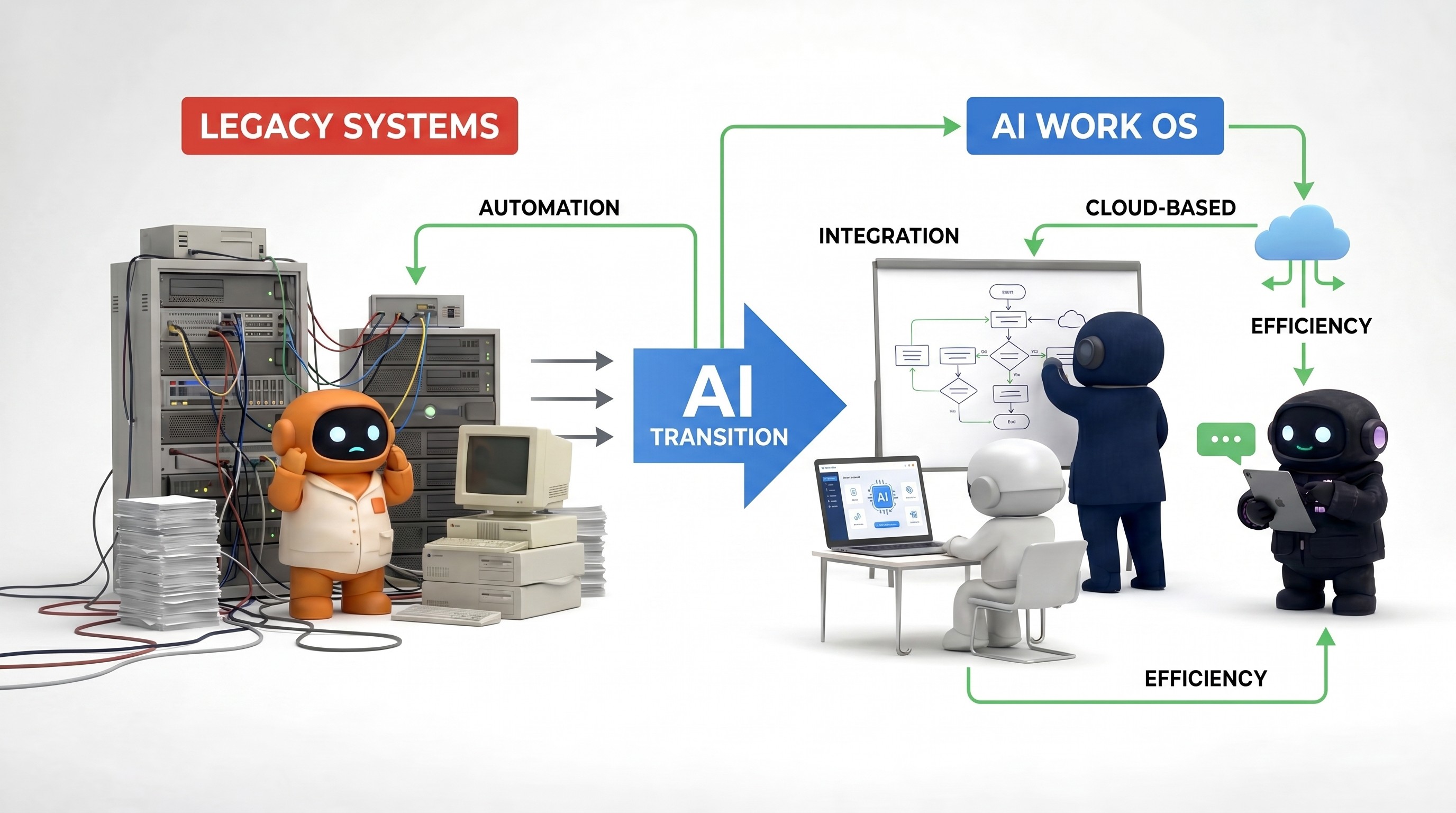
Startups are trading a sprawl of disconnected apps for a single AI Work OS, a workspace where AI employees work across all their tools at once. Instead of paying for and stitching together ten tools, a small team runs from one place where the AI does the stitching, and a lot of the work.
Key takeaway: A startup's real bottleneck isn't tools, it's the human glue between them. An AI Work OS removes the glue work by giving AI employees access to everything at once, so a tiny team can operate like a much bigger one.
The startup tool-stack problem
Every early startup ends up with the same pile: a CRM, an email tool, a project board, a docs app, a support inbox, a few automations, and a stack of AI chat tabs. Each one is fine on its own. Together they create a tax.
You're the integration layer. You copy a lead from email into the CRM, summarize it into a doc, paste context into ChatGPT, then move a card on a board to say it happened. The tools track work. You do the connecting. For a five-person team, that glue work quietly eats the day.
What an AI Work OS changes
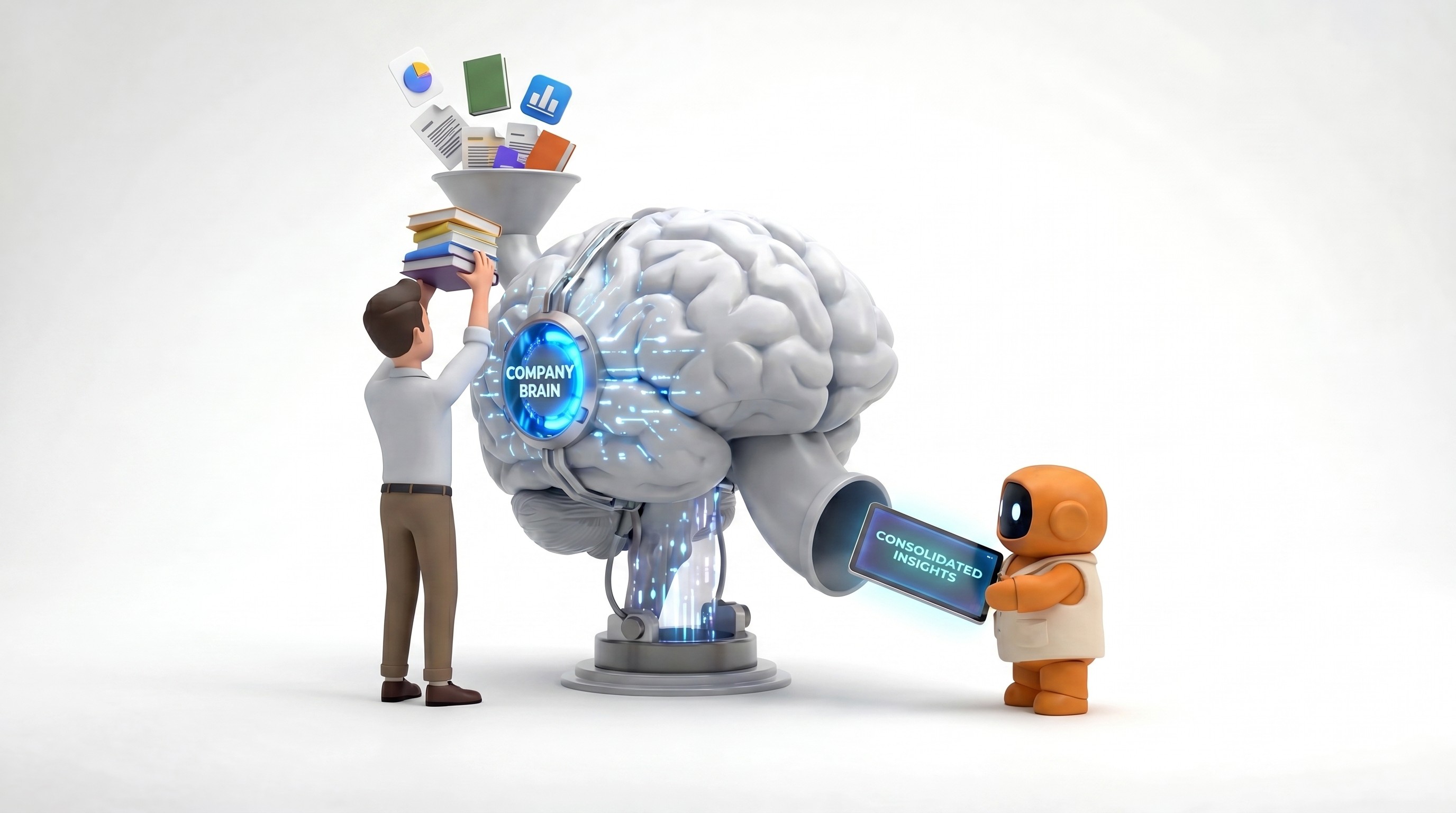
An AI Work OS flips the model. Instead of AI living inside each separate tool, you get one workspace where AI employees have access to all your tools and a shared company brain. The agents do the connecting that used to be your job.
A lead comes in. An agent reads the email, updates the CRM, drafts a tailored reply in your voice, and books the call, because it can see all of those tools and knows your context. You didn't switch apps once.
Typical startup stack | AI Work OS | |
|---|---|---|
Number of tools to run | Many, loosely connected | One workspace |
Who connects them | You, manually | AI employees |
Context | Re-entered per tool | One shared brain |
Who does the work | Mostly you | Agents, with you reviewing |
Scales by | Hiring or more tools | Adding agents |
Why this fits startups specifically
Headcount is your scarcest resource. Startups can't hire a person for every function. AI employees let one founder cover sales follow-ups, support triage, research, and reporting without five hires. (See the math in AI employees vs. hiring and AI employees vs. freelancers.)
Speed is the whole game. The faster you respond to a lead, ship an answer, or turn around research, the more you win. An AI Work OS compresses those loops because the agent acts immediately with full context.
Tool sprawl is expensive twice. You pay in subscriptions and in the hours spent moving data between them. Consolidating into one execution layer cuts both. (Here's how to think about what to keep, consolidate, or cut: replace your tool stack with an AI Work OS.)
What it doesn't replace
An AI Work OS isn't a magic button. You still set direction, make the judgment calls, and review what agents produce. It replaces the glue work and the repeatable execution, not your strategy or your taste. The teams that win with it treat agents like junior coworkers: clear brief, good context, a review step.
How Agently fits
Agently is an AI Work OS built for founders and small teams. It gives you a team of AI employees (sales, support, marketing, operations, research), a shared Brain for context, built-in project management, and live connections to your tools. The point is leverage: run like a 15-person company with a team of five.
Frequently asked questions
What is an AI Work OS for startups?
It's a single workspace where AI employees work across all your connected tools, replacing a sprawl of disconnected apps and the manual work of moving data between them.
Why are startups adopting AI Work OS platforms?
Because headcount is scarce and speed matters. An AI Work OS lets a small team cover more functions and respond faster, without hiring for every role or maintaining a large tool stack.
Does an AI Work OS replace my whole tool stack?
It can replace or consolidate much of it, especially tools whose main job is tracking or holding context. You keep what genuinely needs a specialist, and let agents handle execution across the rest.
Is it affordable for an early-stage startup?
The value comes from consolidation: fewer overlapping subscriptions plus hours saved on manual glue work. For most small teams that nets out cheaper than the stack-plus-time it replaces.
Do I still need employees?
Yes. An AI Work OS handles repeatable execution and frees your team for strategy, relationships, and judgment. It augments a small team rather than removing the need for one.
Running a startup on ten disconnected tools? Try Agently free and run from one AI Work OS instead.
CEP
Omar Ghandour
June
23,
2026
Share on social media