Shared Context for AI Agents: Why Your AI Team Needs One Memory
Shared context is a single pool of facts, history, and rules that every AI agent reads from before it acts, so they all work from the same truth instead of their own isolated version. Without it, a team of AI agents isn't a team. It's a group of strangers who never talk to each other.
Key takeaway: Adding more AI agents doesn't make your work more coherent. It makes it more fragmented, unless those agents share one memory. Shared context is the difference between a swarm of disconnected bots and something that behaves like a real team.
What "shared context" actually means
When people say an AI agent has context, they usually mean the prompt: the few paragraphs you typed in this session. That context dies when the session ends, and it never reaches any other agent.
Shared context is bigger and more permanent. It's the layer that holds:
Facts about your business. Who you are, what you sell, your pricing, your customers.
History. What's been done, decided, and said, so an agent isn't starting from zero.
Rules and voice. How you communicate, what's off-limits, what "good" looks like.
Live connections. The tools agents can read in real time (email, calendar, CRM, docs).
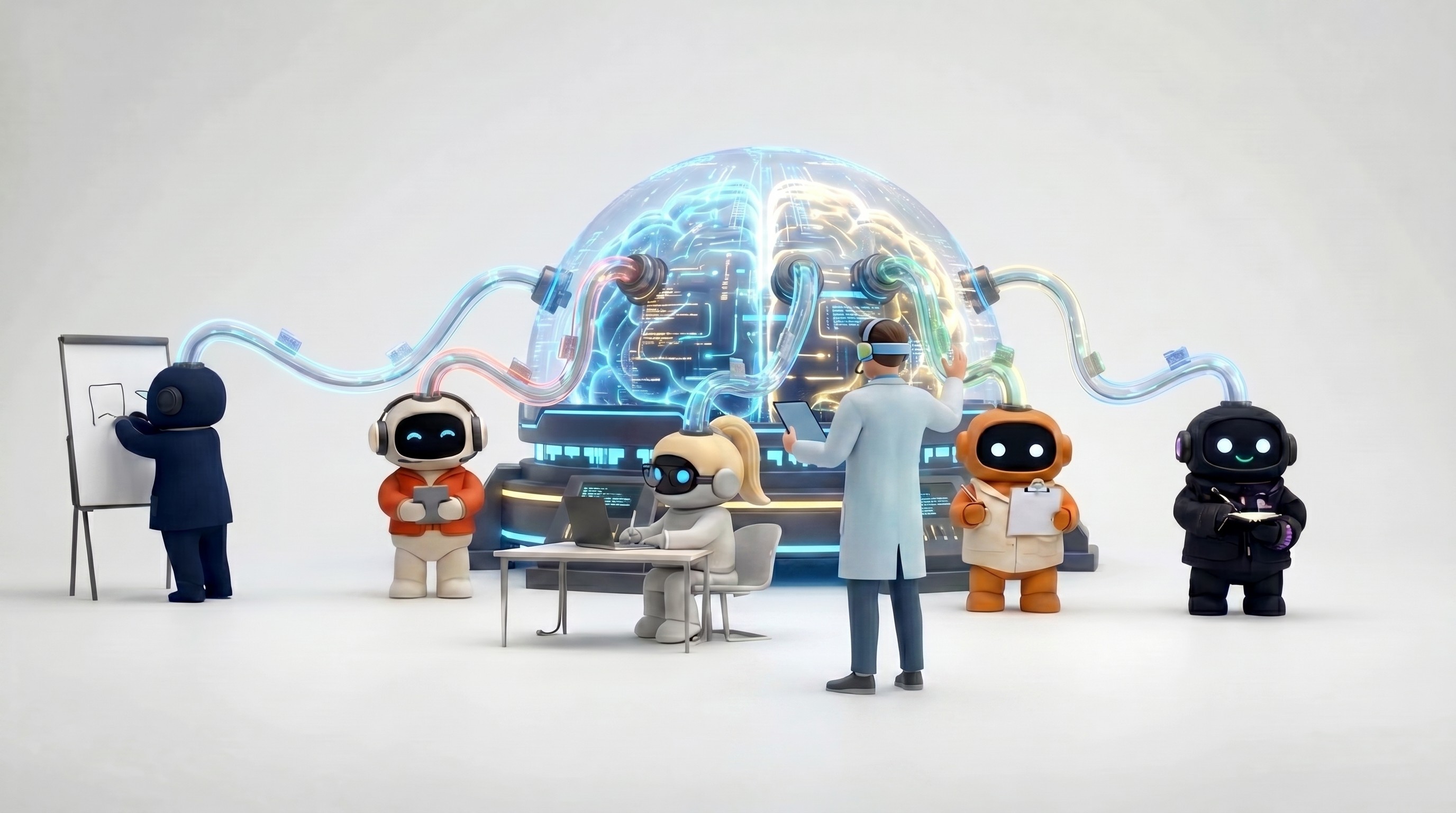
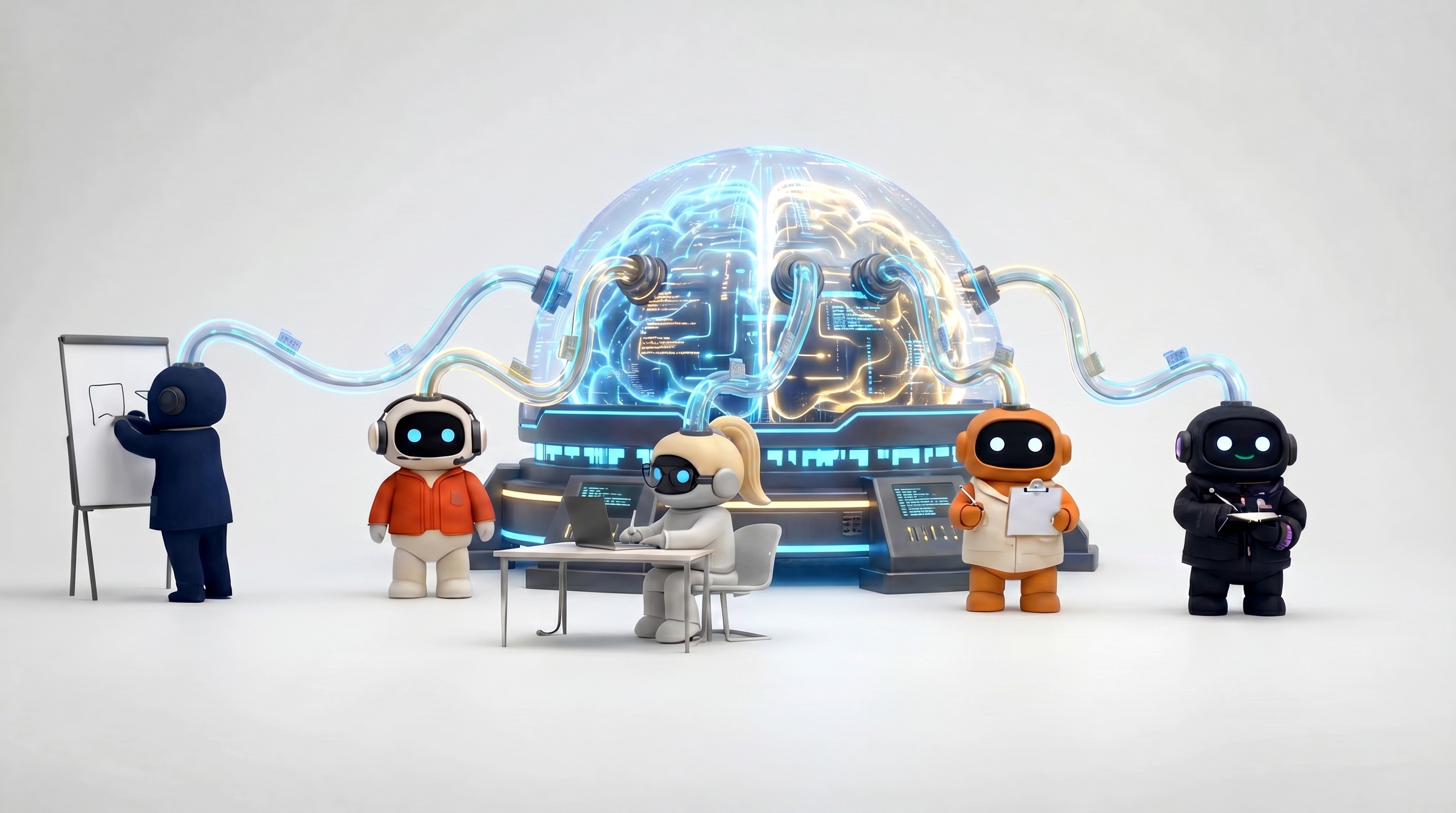
Every agent reads from this same pool. A fact added once is known by all of them, instantly. That's the whole idea.
Why agents fail without it
Run two AI agents without shared context and you get two problems at once.
They contradict each other. Your support agent tells a customer one thing about your refund policy. Your sales agent, briefed separately, says something slightly different. Neither is lying. They just learned different versions. (This is the case for giving AI a single source of truth.)
They repeat your work. Every agent has to be briefed from scratch. You become the integration layer, copying the same background into every tool, every time. The work you were trying to offload lands right back on you.
This is the quiet failure mode of "just add more AI." Each agent is individually impressive and collectively incoherent. The bottleneck stops being intelligence and becomes alignment.
Prompt context vs. shared context
Prompt context | Shared context | |
|---|---|---|
Lifespan | One session, then gone | Persistent across sessions |
Who can see it | The one agent you're talking to | Every agent on the team |
Stays current | You retype it each time | Curated and connected once |
Keeps agents aligned | No | Yes |
Scales with more agents | Gets worse | Gets better |
Prompt context is fine for a one-off question. The moment you have more than one agent doing recurring work, you need shared context or the whole thing drifts.
How shared context turns agents into a team
The unlock is simple. When agents read from one memory, the team's knowledge compounds instead of fragmenting.
Your research agent learns a fact about a competitor. Because it wrote that to shared context, your sales agent now knows it too, without anyone re-briefing it. Your support agent resolves a recurring issue and the pattern is available to everyone. Each agent makes the others smarter.
That's what separates AI agents from chatbots: agents act, and acting safely requires shared ground truth. (We cover this distinction in AI agents vs. chatbots and AI agents vs. automation.)
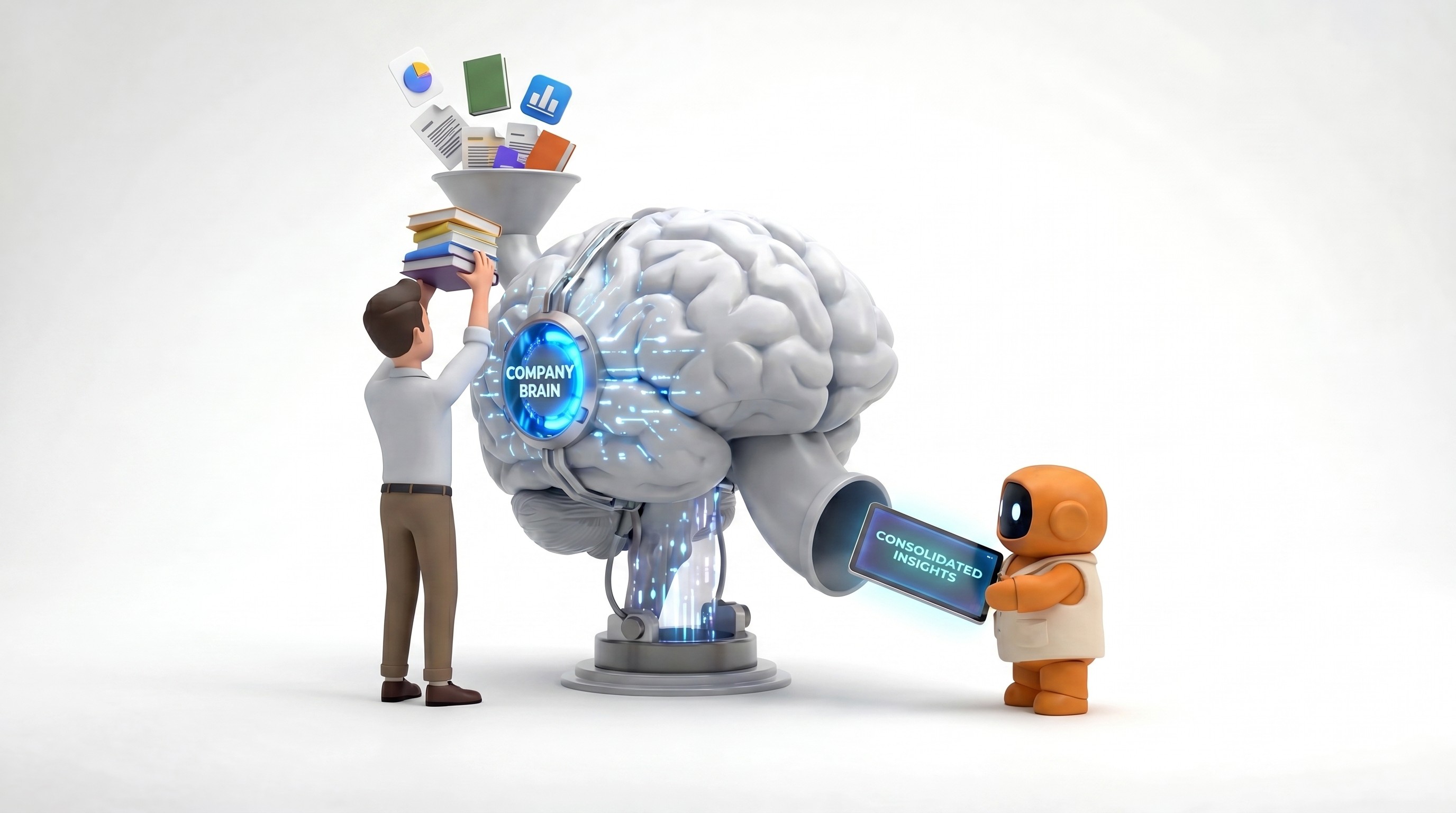
Shared context is also the practical form of a company brain: the brain is the curated memory, and shared context is what happens when every agent is wired to read from it.
How to give your agents shared context
You don't build this with engineering. You build it with curation.
Pick the source of truth. A small, current set of facts your team agrees on today. Not every file you own. (See how to build a company knowledge base for AI.)
Connect your live tools so agents read fresh data instead of stale copies.
Wire every agent to the same pool so nothing lives in a single agent's head.
Keep it current with a light review rhythm, so the context doesn't rot.
The goal is "brief once, known everywhere." Update a fact in one place and the entire AI team updates with it.
How Agently does it
In Agently, every AI employee (sales, operations, marketing, support, research) reads from the same Brain: one curated library of context plus live connections to your tools. Add a fact once and your whole AI workforce inherits it. No agent operates on its own private, outdated version of the truth.
That's why agents in Agently behave like coworkers who've been with you for years, not contractors who need re-onboarding every morning. It's also what lets a small team run like a much bigger one.
Frequently asked questions
What is shared context for AI agents?
Shared context is a single, persistent pool of facts, history, and rules that every AI agent reads from before acting, so all agents work from the same accurate information instead of separate, isolated versions.
Why do AI agents need shared context?
Without it, each agent is briefed separately and holds a different version of the truth, which leads to contradictory output and constant re-briefing. Shared context keeps agents aligned and lets their knowledge compound.
Is shared context the same as a prompt?
No. A prompt is temporary and visible only to the one agent in that session. Shared context is persistent and readable by every agent, so it survives across sessions and tools.
Do I need engineering to set up shared context?
No. It's a curation task, not a coding task. You define the trusted facts, connect your existing tools, and point every agent at the same source.
How is shared context related to a company brain?
A company brain is the curated memory itself. Shared context is the result of wiring every AI agent to read from that brain, so the whole team stays aligned.
Want every AI agent on your team reading from one shared memory? Try Agently free and connect your tools to the Brain.
CEO
Omar Ghandour
June
16,
2026
Share on social media