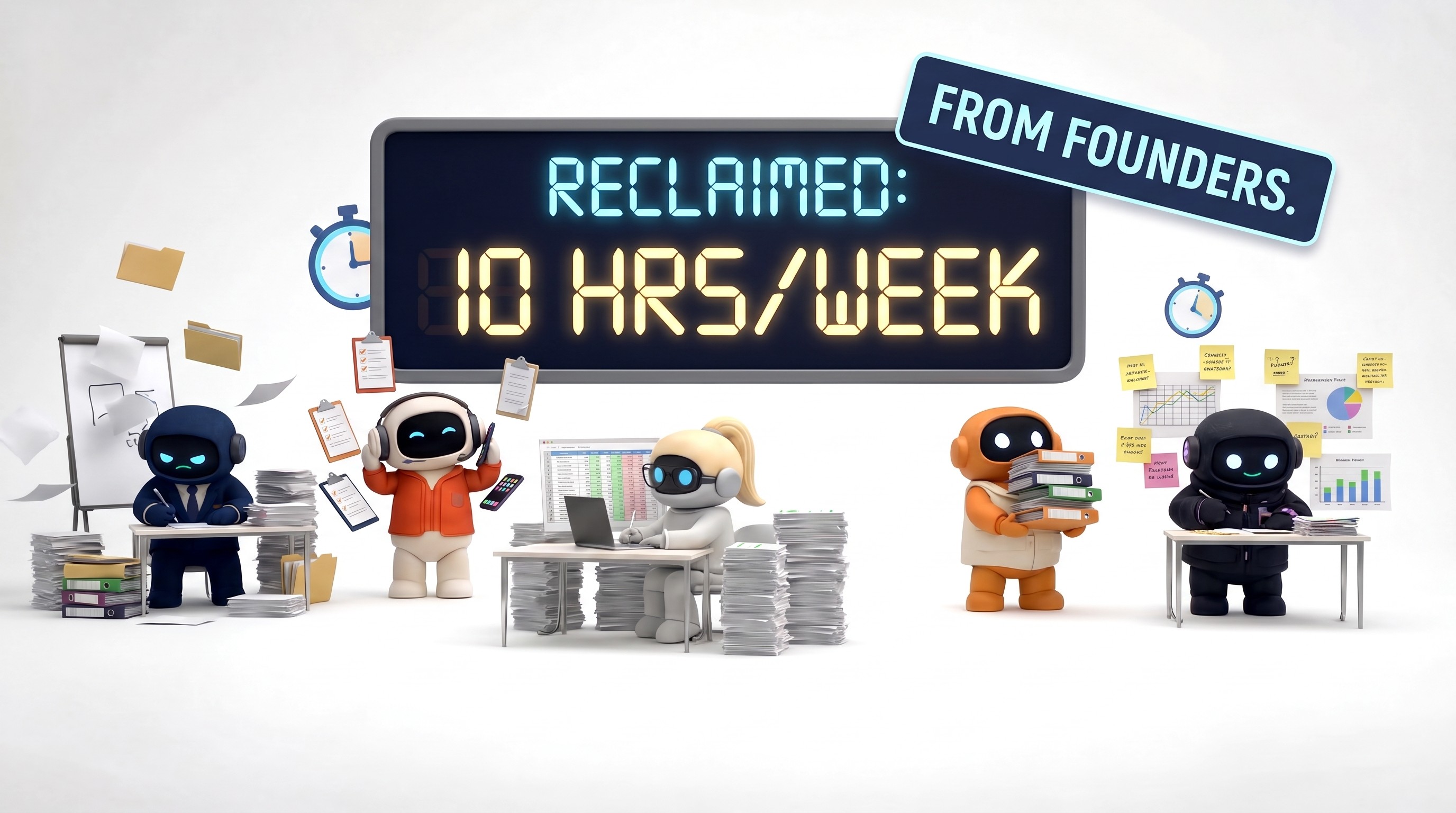
Reclaim 10 Hours a Week: The Busywork AI Should Be Doing for You
You reclaim hours each week by handing the recurring, low-judgment busywork (inbox triage, research, follow-ups, data entry, status reports) to AI employees that do it across your tools. These tasks feel like work, but they're exactly the work AI is built to absorb.
Key takeaway: The busywork eating your week isn't the work that needs you. It's repeatable, rules-light, and context-heavy, which is the precise profile of work an AI employee can take off your plate entirely.
Where the 10 hours actually go
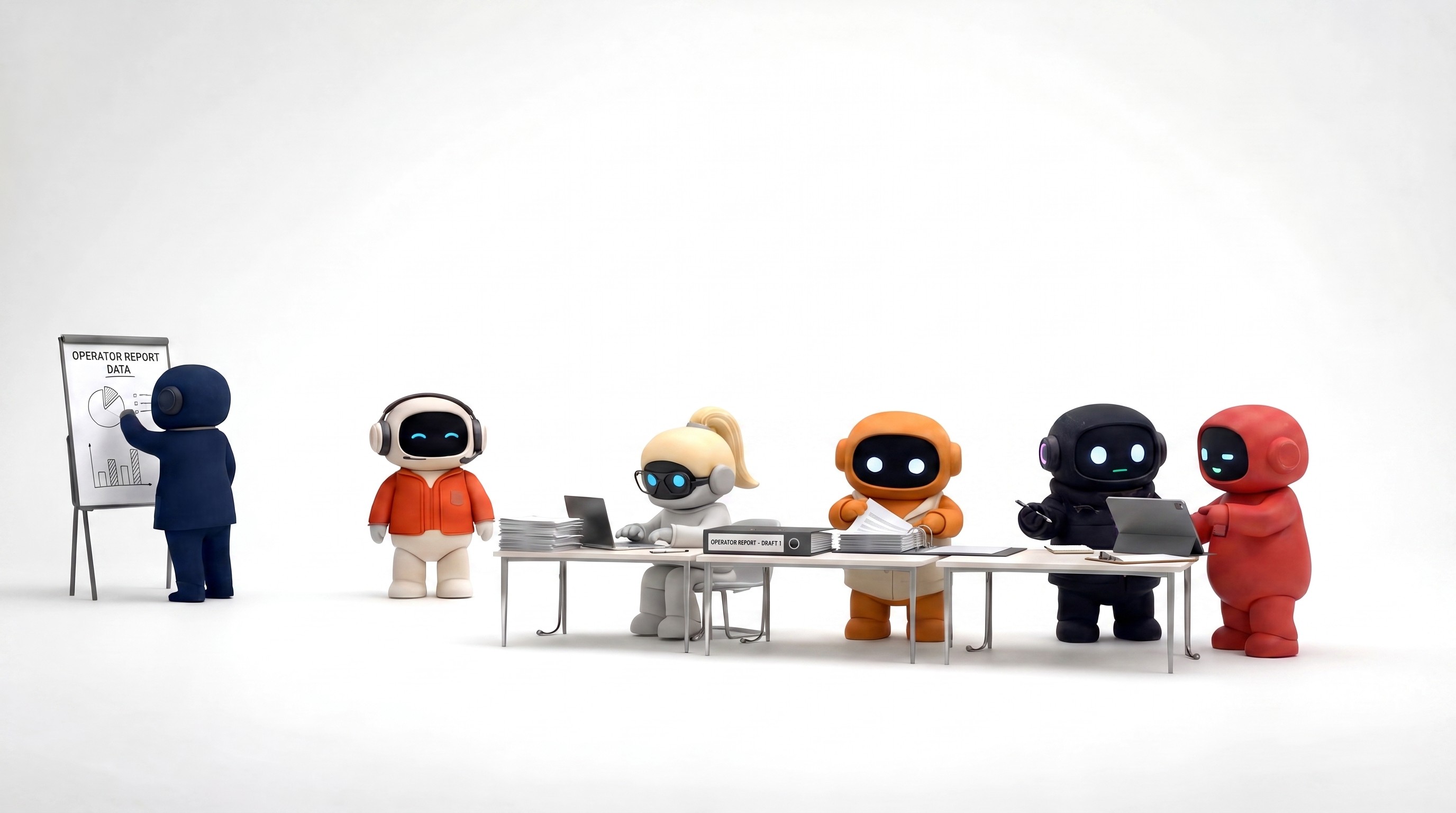
Most knowledge workers lose a full workday a week to tasks that produce no real decisions:
Triaging and sorting an inbox before any real reply happens.
First-pass research before the thinking starts.
Writing the same kind of follow-up over and over.
Copying data between tools so the records line up.
Compiling status updates and weekly reports by hand.
None of it requires your judgment. All of it requires your time. That gap is the opportunity.
The test for "AI should do this"
Not all work is offloadable. Use a quick filter. A task is a strong AI candidate when it's:
Repeatable. You've done it many times the same way.
Low-judgment. The decisions are small or rule-based.
Context-heavy, not taste-heavy. It mostly needs facts you have, not instinct only you have.
Your week | AI should do it | Keep it yourself |
|---|---|---|
Inbox triage | ✅ | |
First-pass research | ✅ | |
Routine follow-ups | ✅ | |
Data entry between tools | ✅ | |
Weekly status reports | ✅ | |
Deciding strategy | ✅ | |
Hard customer conversations | ✅ | |
Creative direction | ✅ |
Everything in the left column is hours you can get back this week.
Why "use ChatGPT more" isn't the answer
You can paste tasks into a chatbot, but you'll spend half the saved time re-briefing it: who the customer is, your tone, the background. And it can't actually do the task across your tools. It drafts; you still send, file, and update.
AI employees are different. They read a shared company brain so they already know your context, and they act across your connected tools, so the task gets finished, not just drafted. That's the difference between a tool that saves minutes and one that gives back hours. (More on that line in AI agents vs. chatbots.)
A week, reclaimed task by task
Inbox (≈3 hrs/week): An AI employee triages, drafts replies in your voice, and surfaces only what needs you. (See how to triage your inbox with AI.)
Research (≈2 hrs/week): It gathers and summarizes before you start, so you arrive at the decision, not the data-gathering. (See how to do competitive research in one hour.)
Follow-ups (≈2 hrs/week): It drafts and logs routine follow-ups from your CRM automatically. (See how to automate sales with AI.)
Reporting (≈2 hrs/week): It compiles your weekly report from your tools. (See zero-effort weekly reports.)
Add it up and you're past ten hours, without dropping a single thing that mattered. Scale that across a few people and you see how a team of five can run like fifteen.
How Agently fits
Agently gives you AI employees that share one Brain and work across your connected tools, so the recurring busywork gets done end to end. You review the output instead of producing it. The hours you spent assembling, triaging, and re-typing go back into the work only you can do.
Frequently asked questions
What kind of work can AI realistically take off my plate?
Recurring, low-judgment, context-heavy tasks: inbox triage, first-pass research, routine follow-ups, data entry, and status reporting. These are repeatable and don't require your personal taste.
How is this different from just using ChatGPT?
A chatbot drafts but needs constant re-briefing and can't act across your tools. AI employees already know your context from a shared brain and complete tasks across your connected apps, so the work is finished, not just started.
Will I really save around 10 hours a week?
It depends on how much of your week is busywork, but inbox, research, follow-ups, and reporting alone commonly add up to a full workday for knowledge workers, which is the range most people reclaim.
What shouldn't I offload to AI?
High-judgment and high-stakes work: strategy, creative direction, and sensitive relationships. Keep those, and offload the repeatable layer underneath them.
Do I have to set this up for every task separately?
No. Once your context lives in a shared brain and your tools are connected, AI employees apply it across tasks, so you're not configuring each one from scratch.
Want your week back? Try Agently free and hand the busywork to your AI employees.
CEO
Omar Ghandour
June
29,
2026
Share on social media