AI Marketing Assistant: What It Handles, What It Doesn't, and How to Use One Well
Marketing teams are stretched thin. There's always more content to create, more channels to manage, more campaigns to launch, and more data to analyze than the team can handle. Adding headcount is expensive. Adding tools often adds complexity without reducing workload.
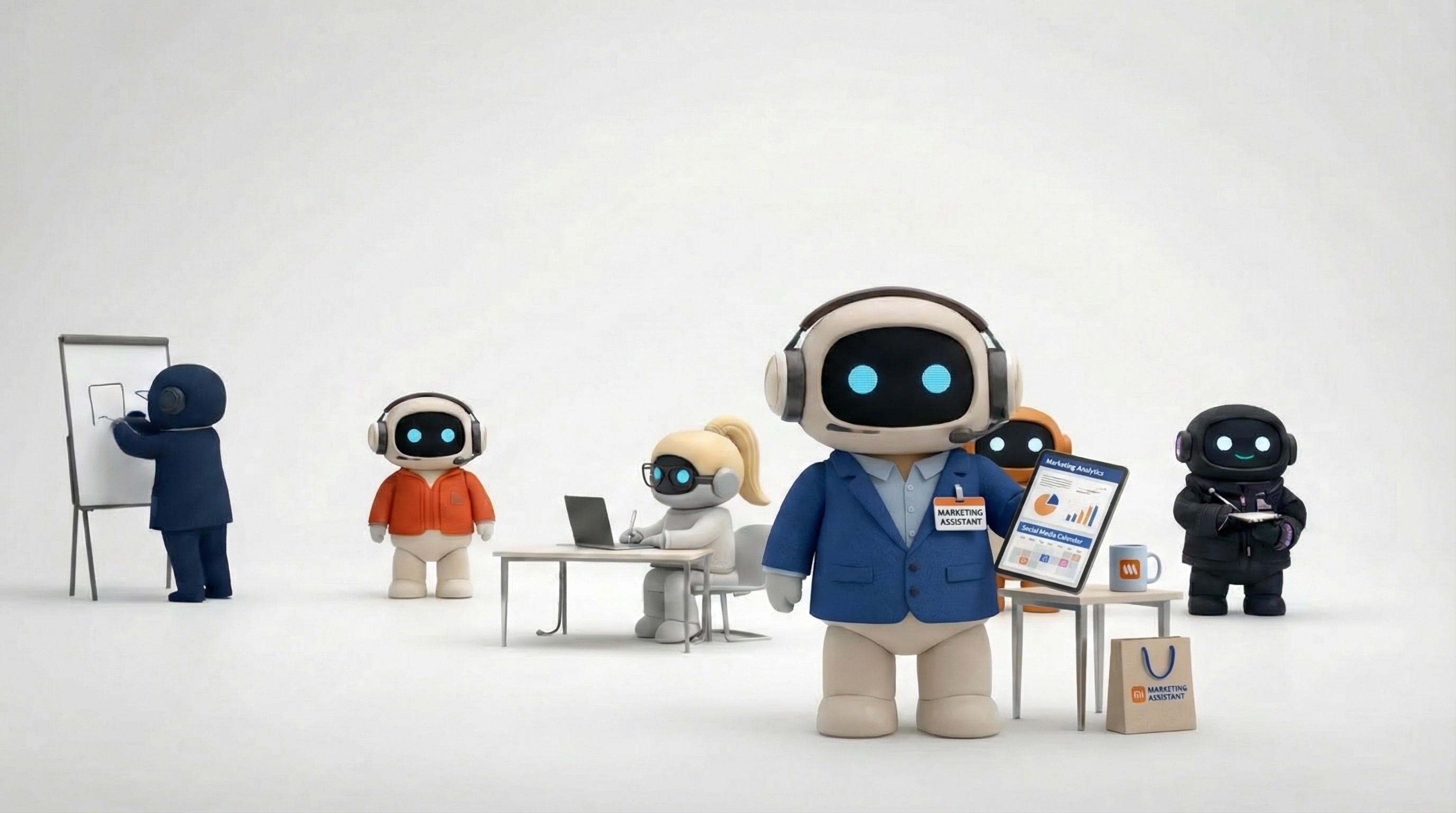
AI marketing assistants promise to fill that gap — an agent that can plan content calendars, write blog posts, draft social media copy, manage email campaigns, and help with strategy. The question is how much of that promise holds up in practice.
What AI Marketing Assistants Handle Well
Content creation at volume
This is the most mature application. AI marketing assistants write blog posts, social media copy, email newsletters, ad copy, product descriptions, and landing page text at a pace that's difficult for human writers to match. A task that takes a writer 3-4 hours — researching, outlining, drafting, editing a blog post — takes an AI assistant 15-30 minutes.
The quality question is fair. AI-generated content tends toward competent but generic unless you give it strong context: your brand voice, target audience, key messaging, competitive positioning. The platforms that include a knowledge base for storing this context produce noticeably better output than those that don't.
Content planning and ideation
Give an AI marketing assistant your industry, audience, and goals, and it can generate content calendar ideas, identify trending topics through web research, suggest content formats, and map topics to funnel stages. It's not a replacement for strategic thinking, but it accelerates the brainstorming and planning phase.
For teams that struggle with "what should we write about next," AI-assisted ideation eliminates the blank page problem.
Social media management
AI assistants connected to LinkedIn and Twitter/X can draft posts, plan posting schedules, create variations for different platforms, and help maintain a consistent presence. Some can post directly through your connected accounts.
The value is highest for teams that know they should be active on social media but can't dedicate someone to it full-time. Consistent, good-enough content beats sporadic, perfect content for building an audience.
Email campaign drafting
Marketing emails — newsletters, announcements, nurture sequences, product updates — follow patterns that AI handles well. The AI can draft multiple variations, adjust tone for different segments, and maintain consistency with your brand voice. Connected to your email tools, it can manage the drafting and sending workflow end to end.
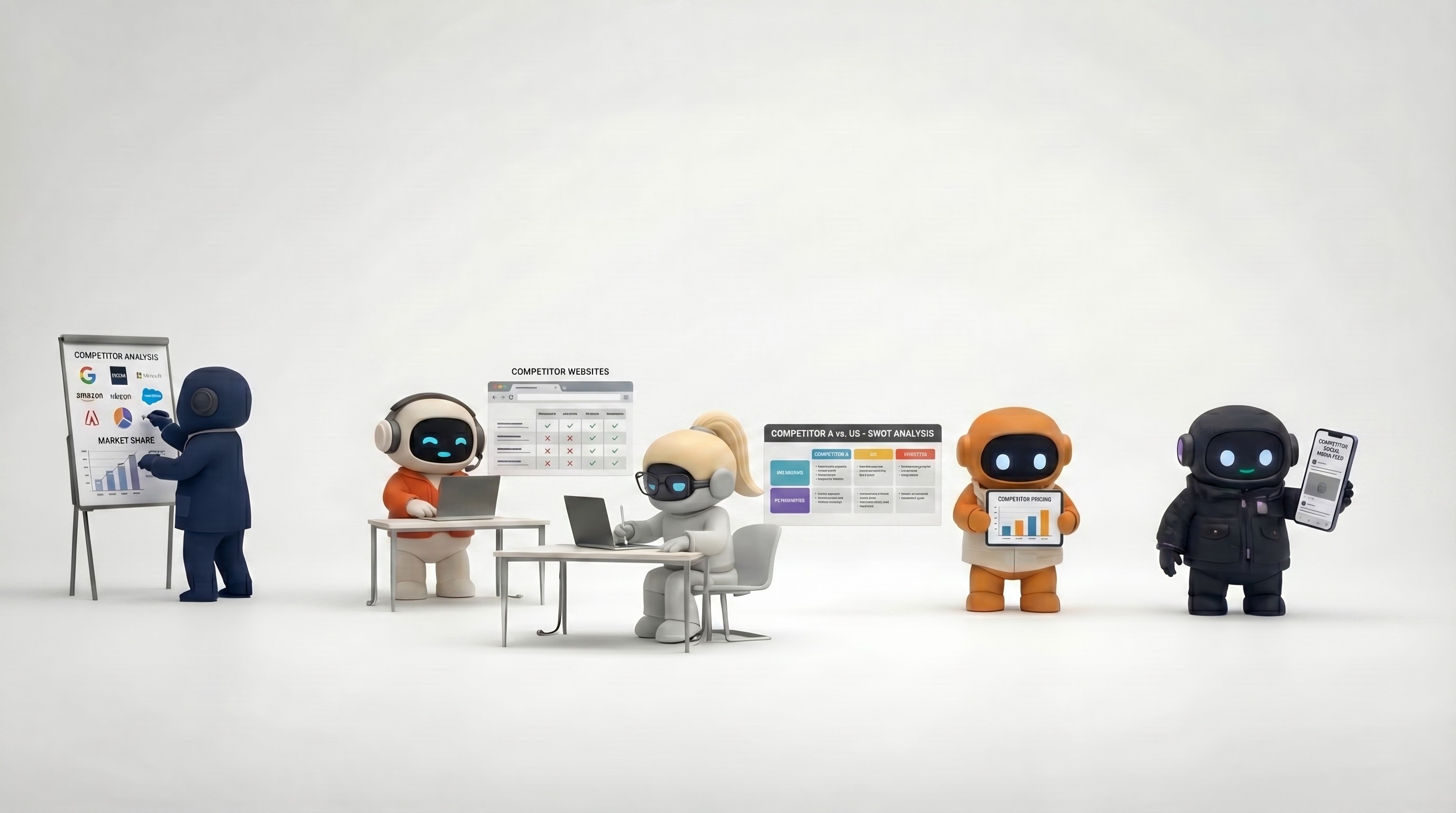
Competitor content analysis
AI assistants with web search capabilities can research competitor content strategies — what they're publishing, which topics they focus on, how they position their messaging, and where there are gaps you can exploit. This research, which might take a marketer a full day, can be synthesized in a conversation.
Campaign planning
Describe your goals and constraints, and an AI marketing assistant can draft a campaign plan — messaging framework, channel strategy, content calendar, timeline, and task list. It won't produce a brilliant campaign concept (that's human creative work), but it'll produce a solid structural framework you can refine.
Where AI Marketing Assistants Fall Short
Original creative concepts
AI can execute on a creative direction. It struggles to invent one. The breakthrough campaign idea, the unexpected brand voice, the content angle nobody else has tried — these come from human creativity, cultural awareness, and the kind of lateral thinking that AI doesn't reliably produce.
AI marketing assistants are excellent at "create content in this style about this topic." They're mediocre at "come up with a campaign concept that will make people stop scrolling."
Brand voice authenticity
AI can approximate your brand voice if you provide guidelines, examples, and context. But "approximate" is the key word. Truly distinctive brand voices — the kind that make readers think "this could only come from this company" — are hard to replicate. AI output tends to smooth out the rough edges and quirks that make a brand voice feel human.
This matters less for informational content and more for content where personality is the point (social media, opinion pieces, brand storytelling).
Strategic judgment
Should you invest in SEO or paid acquisition? Is now the right time to launch a podcast? Should you double down on LinkedIn or expand to TikTok? These strategic decisions require market intuition, knowledge of your specific business dynamics, and judgment about resource allocation that AI doesn't have.
AI can provide data and analysis to inform these decisions. It can't make them for you.
Real-time cultural awareness
Marketing often requires reading the cultural moment — what's trending, what's sensitive, what resonates right now. AI assistants work with web data that may be hours or days old, and they don't have the cultural intuition to know when a topic is about to become controversial or when a trend is already tired.
Visual and design work
Most AI marketing assistants work with text. They don't design graphics, edit videos, create infographics, or produce visual content. The visual side of marketing remains a separate workflow — though AI image generation tools are narrowing this gap.
Performance optimization
AI can help create the content and plan the distribution. It's less effective at the iterative optimization loop — analyzing what performed, understanding why, and adjusting strategy. This data-driven optimization requires connecting to analytics platforms and making nuanced interpretations that current AI marketing assistants don't handle well.
How to Get Real Value From One
Start with your content bottleneck
What's the specific task that's not getting done? Blog posts sitting in the ideas doc? Social media going silent for weeks? Email newsletter lapsing? Start there. Solve one bottleneck before trying to automate everything.
Invest in your knowledge base
This is the single biggest factor in output quality. Upload your brand guidelines, messaging framework, product positioning, customer personas, competitive differentiators, and examples of content you love. AI that has this context produces dramatically better output than AI working from a generic prompt.
Use AI for first drafts, not final drafts
The most productive workflow: AI creates a solid first draft in 15 minutes, you spend 30 minutes editing it into final form. Total time: 45 minutes instead of 3-4 hours. You're not saving time by eliminating editing — you're saving time by eliminating the blank-page-to-rough-draft phase.
Build repeatable workflows
AI marketing assistants deliver compounding value when you establish repeatable patterns. A weekly content workflow might look like:
AI suggests 5 blog topics based on industry trends
You pick one, AI writes the draft
AI creates social media posts promoting the article
AI drafts a newsletter featuring the content
Everything is tracked on a content calendar board
Run this weekly, and you have a content machine with minimal manual effort.
Match the tool to your actual workflow
Some AI marketing tools just write copy (Jasper, Copy.ai). Some embed AI in your existing workspace (Notion AI). Some are full AI agents that research, write, post, and track across multiple platforms. Choose based on what you actually need, not what sounds most impressive.
The Current Landscape
AI employee platforms (like Agently's Pulse agent) provide a marketing-specialized agent with tools for content creation, social posting, email drafting, web research, and campaign tracking in one workspace. The agent handles end-to-end workflows — from research through creation through publishing through tracking. As Agently is a command hub for all the businesses context and memory, all output from the Agents is up to standard and consistent. The Agent is injected directly into the workspace behaving like a delegate not just an agent.
AI writing tools (Jasper, Copy.ai, Writer) specialize in content generation. Strong on copy quality, especially for ads and short-form content. They write well but don't plan, post, or track.
Social media AI tools (Buffer AI, Hootsuite AI) add AI features to social media management platforms. Good for social-specific workflows but don't cover the broader marketing function.
AI-enhanced workspace tools (Notion AI, ClickUp AI) add AI writing and summarization to your existing workspace. Help you write better in context but don't take action across channels.
General-purpose AI (ChatGPT, Claude) produces quality content with good prompting but requires you to manually transfer output to your publishing tools, social accounts, and email platforms.
Honest Assessment
AI marketing assistants are genuinely useful for content production, social media consistency, and campaign planning. They save real hours on repeatable tasks and help small teams maintain a marketing presence that would otherwise require dedicated hires.
They don't replace marketing strategy, creative direction, or the human judgment that makes marketing resonate with actual people. The teams getting the most value treat AI as the production engine while keeping humans on creative direction and strategic decisions.
If your marketing bottleneck is "we know what to do but can't produce enough content to do it," an AI marketing assistant directly addresses that. If your bottleneck is "we don't know what our marketing strategy should be," you need a human strategist first, and AI second.
Agently's Pulse agent handles content strategy, social media, email campaigns, and competitive research — with your brand voice built in. Try it free.
CEO
Omar Ghandour
March
3,
2026
Share on social media